




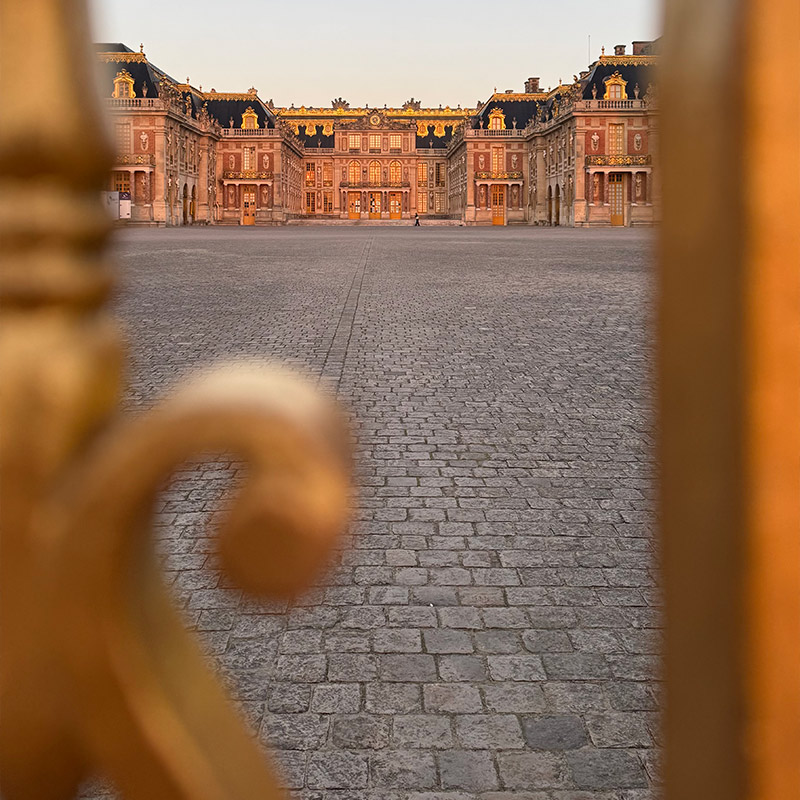
Surely the splendid courtyards of the Palace of Versailles are France’s most admired front yards ? Flanked by the opulent architecture of France’s royal palace, it is the raw material of the oceans of humble cobblestones (or rather setts) that is our theme here.

The original cobblestones of the Palace of Versailles
The stone chosen for paving the courtyards (Cour Royale and Cour d’Honneur) and the vast military parade ground (La Place des Armes) is sandstone, often referred to as gritstone when it is particularly dense.
The cobblestones of Versailles Palace are principally from quarries at Fontainebleau, also near Paris, chosen for the beige-grey tones which blend well with the chateau’s stonework.
Sandstone being a hard material, resistant to damp and freezing winters, it is very durable over time and has also resisted the passage of carriages and millions of visitors since the 17th century.
The cobblestones at Versailles are particularly big, so are therefore real heavyweights at approximately 16 kg (35 lb), with 25 of them being required per square metre (approx 2.3 per sq ft).
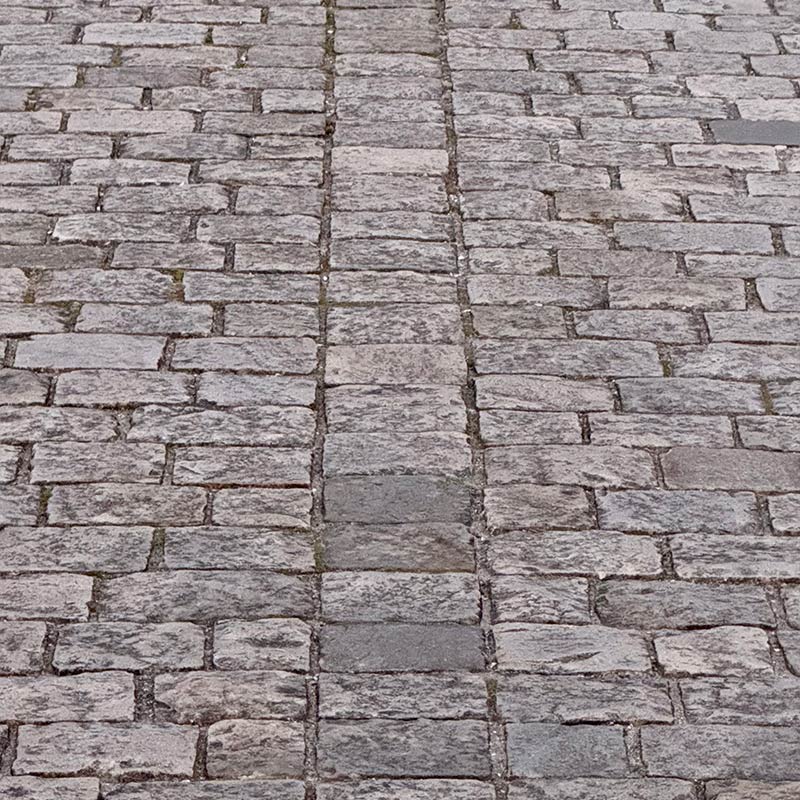
Our truly reclaimed cobblestones comparable to Versailles


Rest assured none of BCA’s stocks of comparable antique reclaimed cobbles or setts have been wrenched up from any of France’s precious “Monuments Historiques”.
Most are mercifully smaller than the giant cubes of Versailles, making them more straightforward to procure, to transport and to install. Being virtually indestructible they mostly come from more basic and functional locations, such as disused 19th century railway sidings, mills and factories, quaysides and city streets.
You can view current stocks of our Truly Reclaimed antique paving via these links, paying particular attention to those comparable to the paving at Versailles, BCA’s refs 00901, 2024021, 201603 and 49145 which are either from Fontainbleau quarrries, or other similar quarries which are just as historic, authentic and durable.
Traditional Paving Techniques at the Palace of Versailles
Timeless craftsmanship captured at Versailles
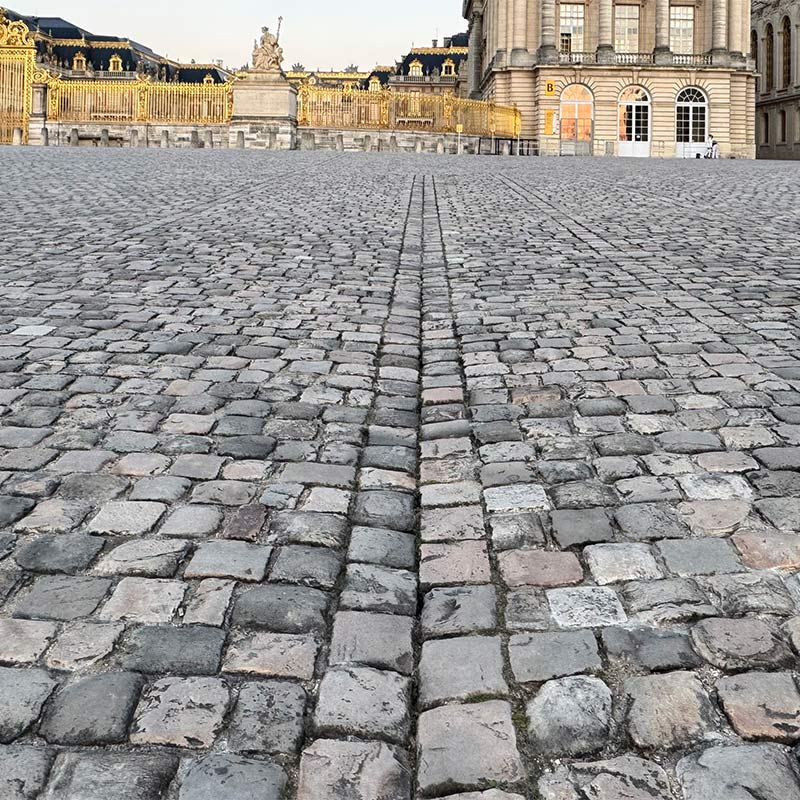
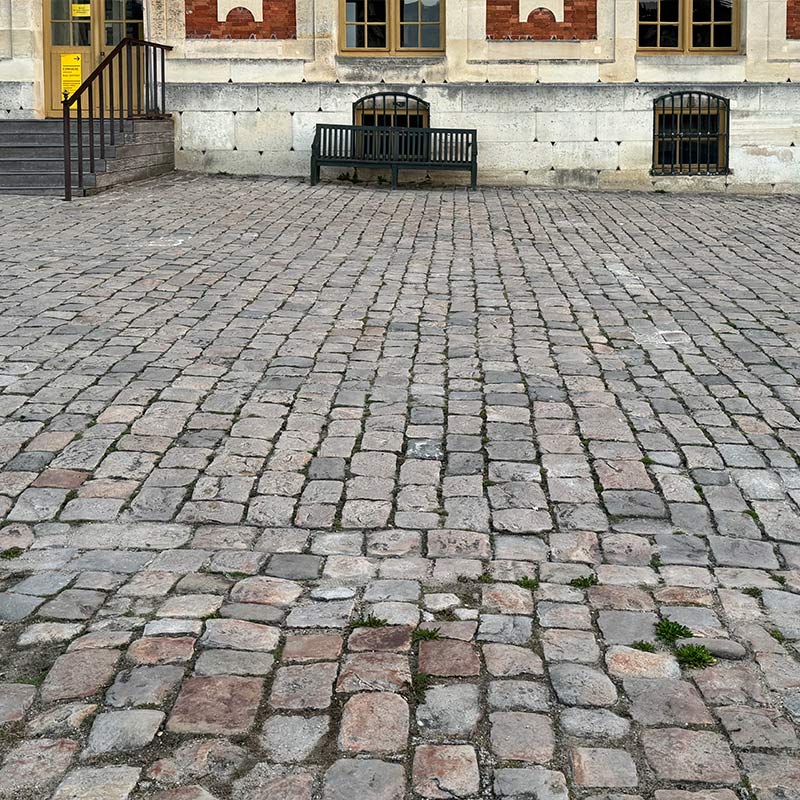
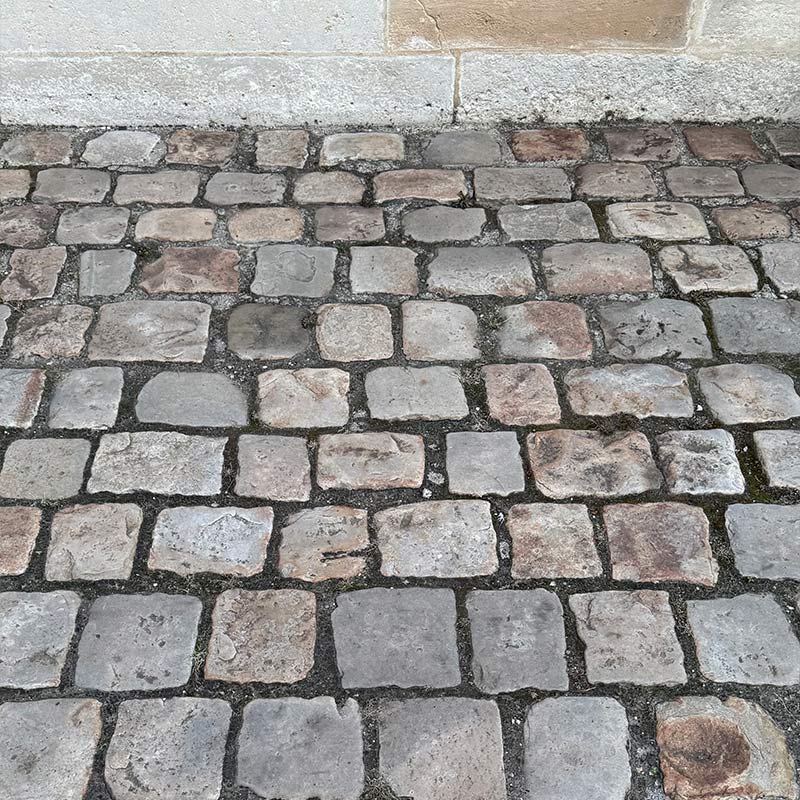
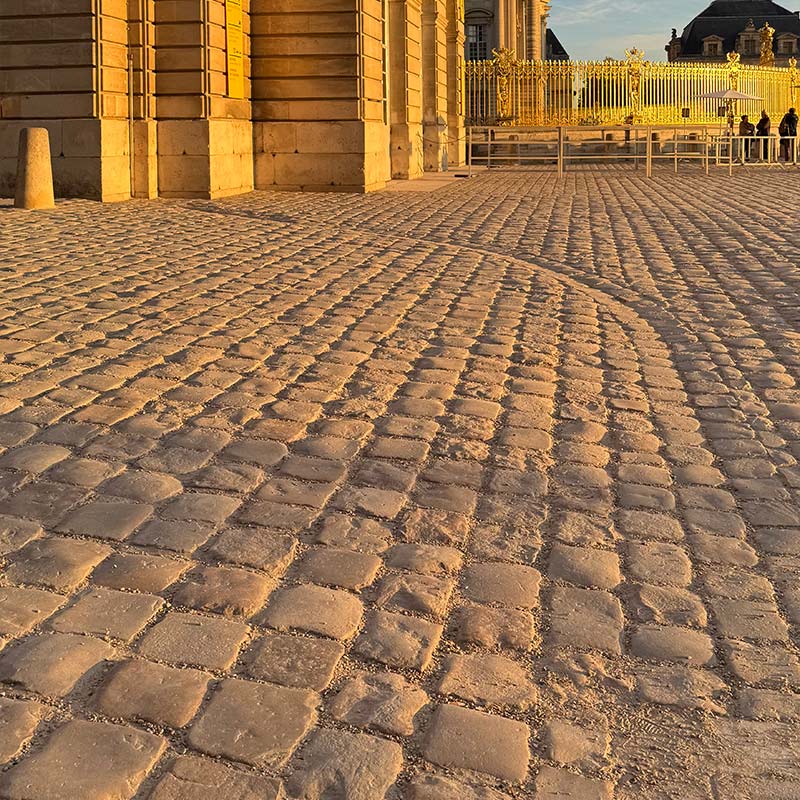
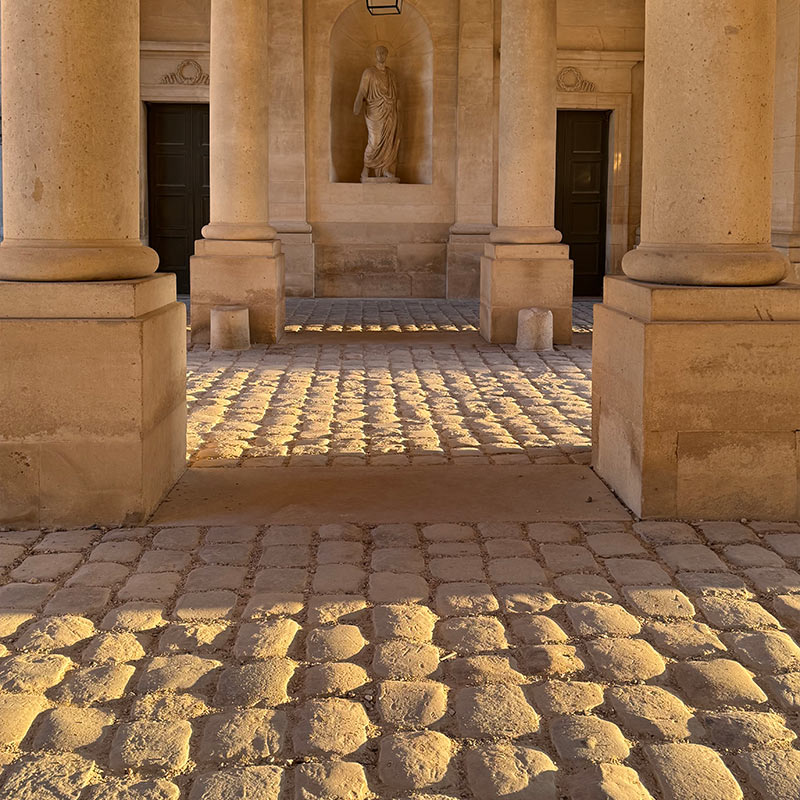
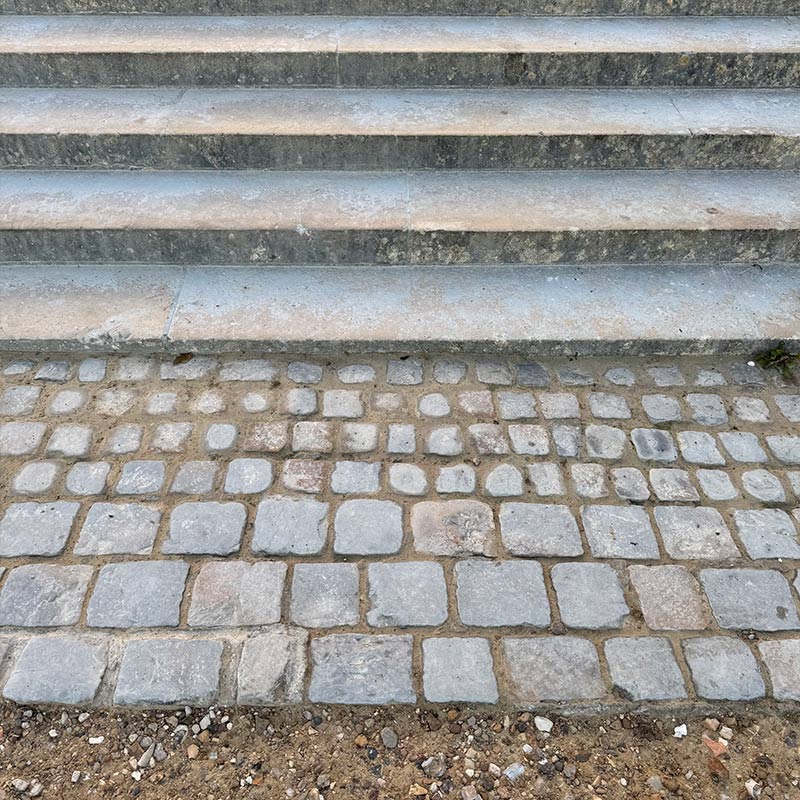
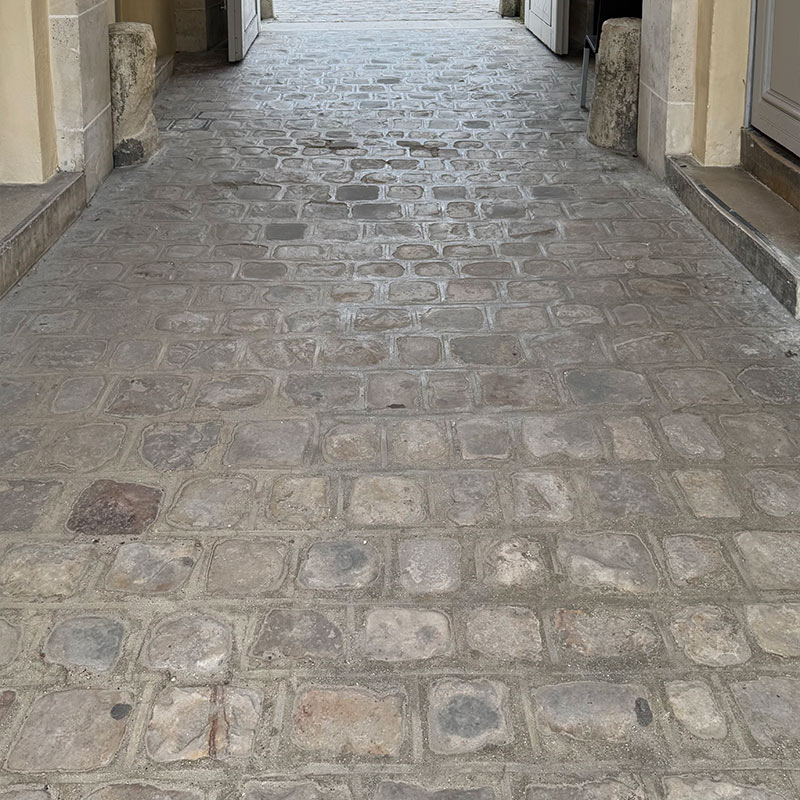
My photos taken at Versailles mostly in early morning sunshine in October 2025 show centuries-old paving at the height of excellence. Although on a grander scale than most clients would contemplate, our extensive stocks do permit large scale projects that can be laid in the same traditional and pragmatic way.
A traditional sand and gravel foundation for Versailles setts
Please take particular notice of the way most of the areas photographed were left without joints grouted in mortar. They were bedded down onto a hardcore and gravel base with sand over, and laid edge to edge (or nearly) with loose sand then brushed into the cracks.Permeable paving and sustainable drainage at the Palace of Versailles
The expanses of paving at Versailles thereby permit rainwater to permeate vertically into the ground below. This is the best solution for retaining water in Nature as opposed to channeling 100% immediately to storm water drains, which is the damaging « concrete jungle » approach that increasingly provokes catastrophic flooding downstream. Unless your country’s or State’s building regulations impose laying ALL paving onto concrete (regardless of common sense), we would encourage having them laid traditionally as at Versailles, thereby saving the client money on unnecessary concrete and thereby allowing rainwater to drain down vertically. If joints have to be grouted for zones that are more patio than driveway, for ease of cleaning and ensuring a more even surface, that is fine and understandable. Some of the photos show exactly that.Managing rainwater at the Palace of Versailles with traditional stone gulleys
Inevitably at Versailles once the sand joints become water-logged by heavy rain that excess needs run-off gulleys to channel the flow to where it needs to go. Some of the photos show cobblestones laid to form gulleys.
Architectural and Landscape professionals are accustomed to getting the levels and slopes right, so there should be no issues there so long as the choice of tradional cobblestones is a fairly early decision. Please see the separate article showcasing rainwater gulleys at Versailles.

